What is the Cirrus CAPS? A Pilot's Guide to the Parachute System
 Mycah Pittman
 Learn about the Cirrus Airframe Parachute System (CAPS), a revolutionary safety feature on the SR22T. Discover how it works, when it's used, and why it provides unparalleled peace of mind for pilots and passengers at Blitz Aviation.
For many aspiring pilots, and their families, the biggest question isn’t about learning to fly; it’s about safety. While aviation is statistically one of the safest forms of transportation, the thought of an emergency can be a significant emotional hurdle. What if there was a safety feature so revolutionary it could change the outcome of a worst-case scenario?
Enter the Cirrus Airframe Parachute System (CAPS).
At Blitz Aviation, we are proud to feature the Cirrus SR22T in our fleet, an aircraft equipped with this game-changing technology. Understanding how CAPS works provides unparalleled peace of mind and highlights why Cirrus has become a leader in general aviation safety.
What is the Cirrus Airframe Parachute System (CAPS)?
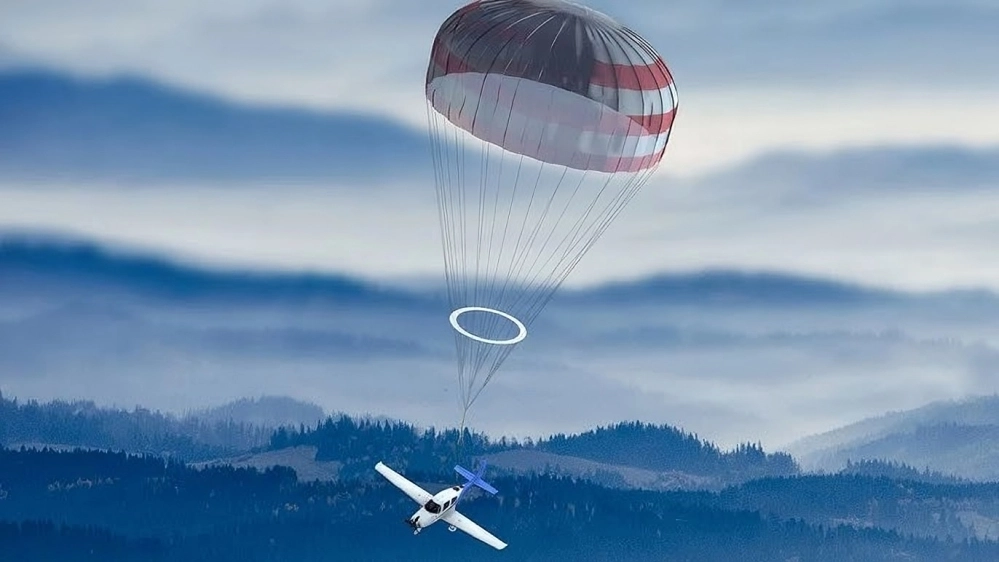
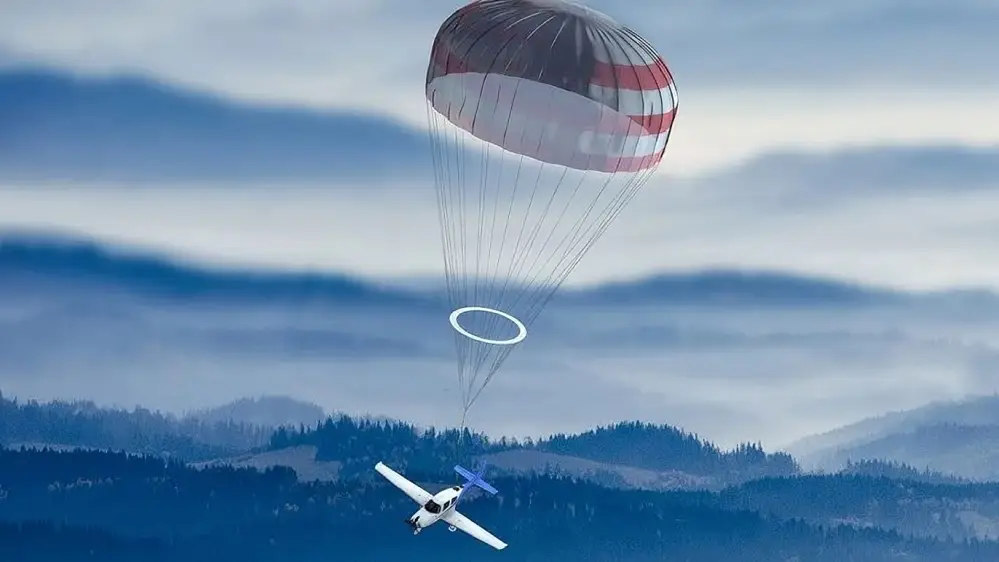
CAPS is a whole-airframe parachute system designed to bring the entire aircraft and its occupants safely down to the ground in the event of a life-threatening emergency.
Instead of the pilot or passengers wearing individual parachutes, a single, large parachute is integrated into the aircraft’s airframe itself. When activated, a solid-propellant rocket deploys the parachute, which then lowers the entire plane to the ground.
This system is a standard feature on every Cirrus aircraft ever built, a testament to the company’s commitment to safety.
How Does CAPS Work?
The activation of CAPS is straightforward and designed for use under extreme stress.
- Activation Handle: The pilot or a passenger pulls a red handle located in the cabin ceiling. This handle is protected by a cover to prevent accidental deployment.
- Rocket Deployment: Pulling the handle ignites a solid-propellant rocket, which launches rearward from the fuselage, pulling the parachute and its lines out for deployment.
- Canopy Inflation: The parachute inflates within seconds, automatically cutting specific aircraft harnesses to ensure the plane descends in a stable, slightly nose-low attitude.
- Safe Descent: The aircraft descends under the canopy at a rate of approximately 1,700 feet per minute. While the landing is firm, the airframe, seats, and landing gear are all designed to absorb the impact and protect the occupants.
The entire sequence, from pulling the handle to full parachute inflation, takes only a few seconds.
When Would a Pilot Use CAPS?
CAPS is designed as a last resort for situations where a pilot has lost control of the aircraft and a safe landing is no longer possible. It is not a substitute for good piloting skills but rather a final layer of protection.
Scenarios for CAPS deployment include:
- Mid-air collision
- Spacial disorientation, especially in poor weather (IMC)
- Engine failure over inhospitable terrain where a forced landing is impossible
- Structural failure
- Pilot incapacitation
Cirrus provides extensive training to its pilots on when and how to make the decision to deploy CAPS. The primary rule is simple: if you are facing a life-threatening situation with no other viable options, pull the handle.
A Proven Record of Saving Lives
The most compelling aspect of CAPS is its proven track record. As of early 2024, the Cirrus Owners and Pilots Association (COPA) has documented over 120 successful CAPS deployments, resulting in more than 250 survivors who walked away from otherwise unsurvivable accidents.
This data provides a powerful answer to the question of “what if?” It demonstrates that in the rare event of a catastrophic failure, there is a system in place with a history of success. This commitment to safety is a core reason why we chose to add the SR22T to our training and rental fleet.
Training with Safety as the Top Priority
At Blitz Aviation, our commitment to safety goes beyond just our aircraft. We believe that a safe pilot is a well-trained pilot. Our instructors provide comprehensive training on all aircraft systems, emergency procedures, and aeronautical decision-making.
By training in an aircraft like the Cirrus SR22T, students not only learn to fly a high-performance machine but also gain a deep appreciation for the layers of safety built into modern aviation. It provides confidence for the student, peace of mind for their family, and a standard of care that defines our entire flight school safety philosophy.
Frequently Asked Questions
1. Can CAPS be deployed accidentally? It is extremely unlikely. The activation handle is protected by a safety cover and requires a forceful pull (45-90 pounds of force) to activate.
2. Can the parachute be repacked and reused? Yes, after a deployment, the system can be inspected, repacked, and reinstalled by a certified Cirrus service center. The aircraft itself is often repairable as well.
3. At what altitude can CAPS be used? The recommended minimum deployment altitude for a controlled descent is around 2,000 feet above the ground (AGL), though it has been successfully deployed at altitudes as low as a few hundred feet.
4. Does training in a CAPS-equipped aircraft cost more? While the Cirrus SR22T is a premium aircraft, the peace of mind it provides is invaluable. We offer competitive rental and training rates. Contact us for a personalized quote.
Experience the Future of Aviation Safety
The Cirrus Airframe Parachute System represents a monumental leap forward in general aviation safety. It provides a definitive answer to the “what if” questions that can create anxiety for new pilots and their loved ones.
If you’re ready to begin your flight training journey with an unwavering focus on safety and the most advanced technology available, we invite you to learn more about our programs.
Schedule a discovery flight today to experience the Cirrus SR22T firsthand or enroll in a program to start your training with confidence.
Blitz Aviation
Professional flight training school near Salt Lake City, Utah, specializing in accelerated pilot programs. Get your pilot license faster with our experienced instructors and modern fleet.